If you’re dealing with chronic knee pain or a stubborn, aching back, most people rotate between over-the-counter options like acetaminophen, ibuprofen, or naproxen. They work—but they all come with tradeoffs.
There’s another option that doesn’t get nearly enough attention: curcumin.
Curcumin is the active compound found in turmeric, and it does something most pain relievers don’t—it targets pain and inflammation from multiple angles, while also supporting tissue repair.
Why Curcumin Stands Out
1. Pain Relief Like Acetaminophen
Curcumin helps block pain signals in the brain, similar to acetaminophen. That means you still get meaningful relief without relying solely on traditional painkillers.
2. Stronger Inflammation Control Than Ibuprofen
Ibuprofen works by blocking the COX-2 (cyclooxygenase) pathway, which drives inflammation. Curcumin does that too—but it also blocks the LOX pathway, a second major driver of inflammation.
More pathways blocked = less overall inflammation, especially in joints.
3. Longer-Lasting Support Than Naproxen
Naproxen is known for lasting longer than other NSAIDs, but curcumin can provide all-day support without the same wear-and-tear on your body—particularly your kidneys.
4. Supports Collagen and Joint Health
Here’s where curcumin separates itself completely: it helps support collagen production, which is essential for joint structure, cartilage, and connective tissue.
So instead of just masking pain, it helps your body rebuild and maintain.
How to Take It (This Part Matters)
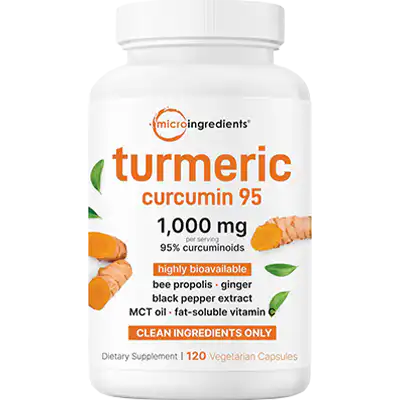
Not all curcumin is created equal. If you want real results, you need the right formulation:
- 95% Curcumin Extract – Lower concentrations won’t deliver the same effect.
- Black Pepper (Piperine) – Boosts absorption up to 30x, making it actually usable by your body.
- Ginger – Helps prevent stomach irritation and improves tolerance.
Without these, you’re likely not getting the full benefit.
Curcumin isn’t just another supplement—it’s a multi-targeted approach to pain relief. It reduces inflammation, supports joint structure, and helps your body recover instead of just covering symptoms.
For bad knees and bad backs, that combination can make a real difference.