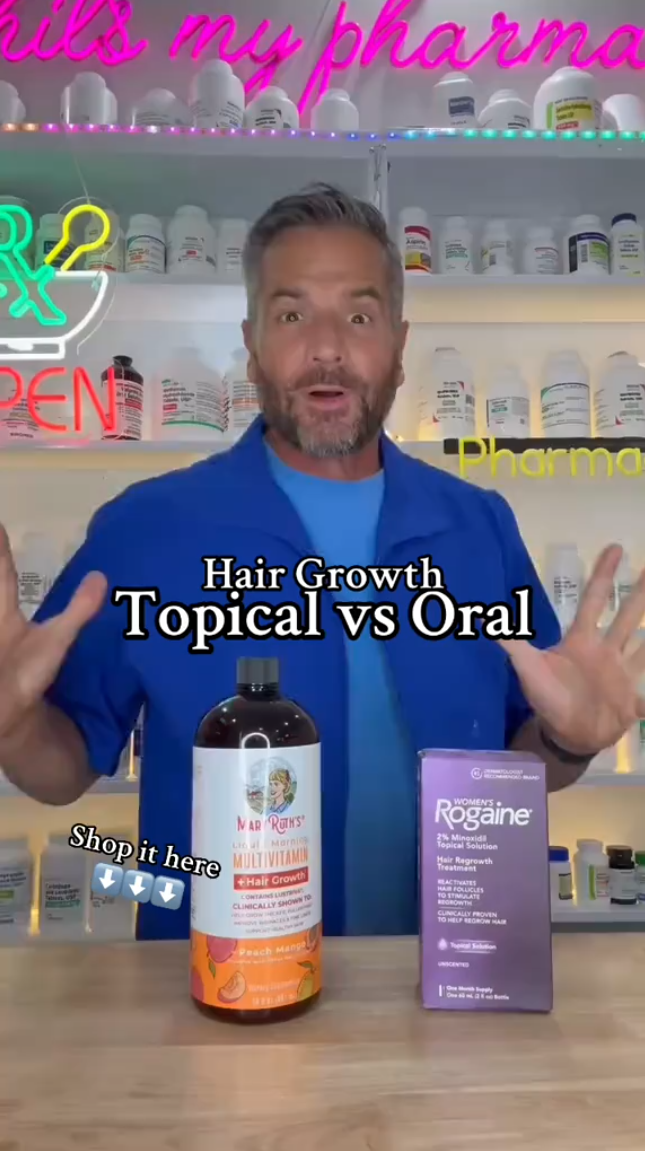
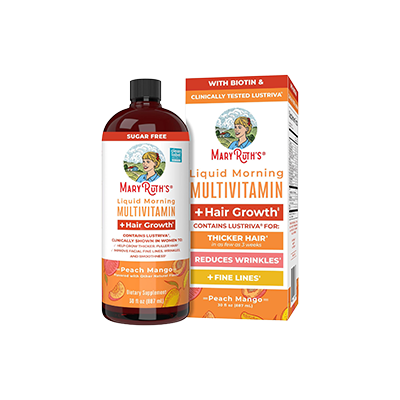
I’ve wanted to compare a topical hair-loss treatment with an oral product for a long time, and today we’re putting the classics head-to-head: Rogaine (topical minoxidil) vs. MaryRuth’s Hair Vitamin.
Rogaine has one mechanism: increase blood flow to the hair follicle so more oxygen and glucose reach the root. That matters, because better blood flow helps prolong the anagen phase—the growth phase of the hair cycle. But that’s where topical minoxidil begins and ends.
MaryRuth’s Hair Vitamin, on the other hand, hits multiple pathways at once.
What MaryRuth’s Hair Vitamin Does
- Silica-stabilized arginine – boosts blood flow just like minoxidil, helping the follicle stay nourished longer.
- Magnesium + high-potency biotin (40× stronger) – supports a longer anagen phase and helps stimulate dermal papilla cells, which are responsible for making new hair follicles.
- MSM (methylsulfonylmethane) – also helps activate papilla cells to encourage new growth.
Inositol – binds excess DHT, reducing hormone-related shedding. (Rogaine does not do this.) - Methylated B9 & B12 – fuel mitochondria inside the follicle so the hair is stronger and less likely to shed. (Again, topical minoxidil cannot do this.)
In short, one increases blood flow. The other improves blood flow, builds new follicles, protects against hormonal shedding, and supports mitochondrial energy.
And the real kicker: when you stop Rogaine, everything you gained falls out.
MaryRuth’s helps support the internal systems that keep hair growing long-term.
You can use them together or individually—but if you’re starting to see shedding?
I would absolutely reach for MaryRuth’s Hair Vitamin first.